

Delirium Phenotypes
Health Equity and Social Determinants of Health
Delirium Phenotypes
Kim Oosterhouse, PhD
Dr. Oosterhouse: I’ve always had an interest in delirium because I was an ICU nurse for my clinical practice and I have a passion for older adults. Currently, I’m also out in the community in the Edgewater area on the Lake Shore Campus, working with older adults. At any rate, in the ICU, the majority of patients are people aged 65 and older. I was seeing a lot of patients that would become confused, not themselves, and some would start getting physically aggressive and angry.
Unfortunately, delirium goes unidentified and unrecognized. It happens frequently, and not just in acute care. It happens in the community as well, probably much more so than we even realize. I wondered how many people actually just don’t get help when they are living alone. That was my interest. While I am not an informaticist by any stretch of the imagination, I did love statistics. I got involved in CHOIR because when I got to Loyola, I saw they had this rich clinical research database. However at Loyola at the time, they were not using any of the screening tools for delirium.
I had this rich data source but I didn’t have anything other than ICD-10 (disease classification) codes that could say whether a person has delirium or not. To try to identify these patients was really going to be difficult. I talked to my mentor, nurse informaticist Dr. Kathy Bobay, and she was phenomenal with helping me. She was developing a method to extract data with electronic health records for natural language processing (NLP). The electronic health record is structured. It’s all the check boxes and vital signs. The unstructured data is the narrative note, the clinical note. Well, 80% of the chart is narrative notes, and we don’t use that data. As such, NLP has really been wonderful in allowing researchers to use that part of the electronic health record.
One core task was bringing different billing codes together, whether it be for labs, diagnosis, or procedures, and creating one ontology so that they are all grouped in such a way that they have a common meaning and understanding. I used those identifiers as described by the unified medical language meta thesaurus in order to extract unique identifiers for delirium from the electronic health record.
This took a little while but now we’re at the point that I’m looking at machine learning algorithms and developing that model using random forests and other support vector machines (SVM), so different methods of modeling may be able to predict or identify those that most likely have delirium. The fact that it can be done almost in real time is important because if we can’t identify it, we can’t treat it, and the outcomes are really bad if unidentified.
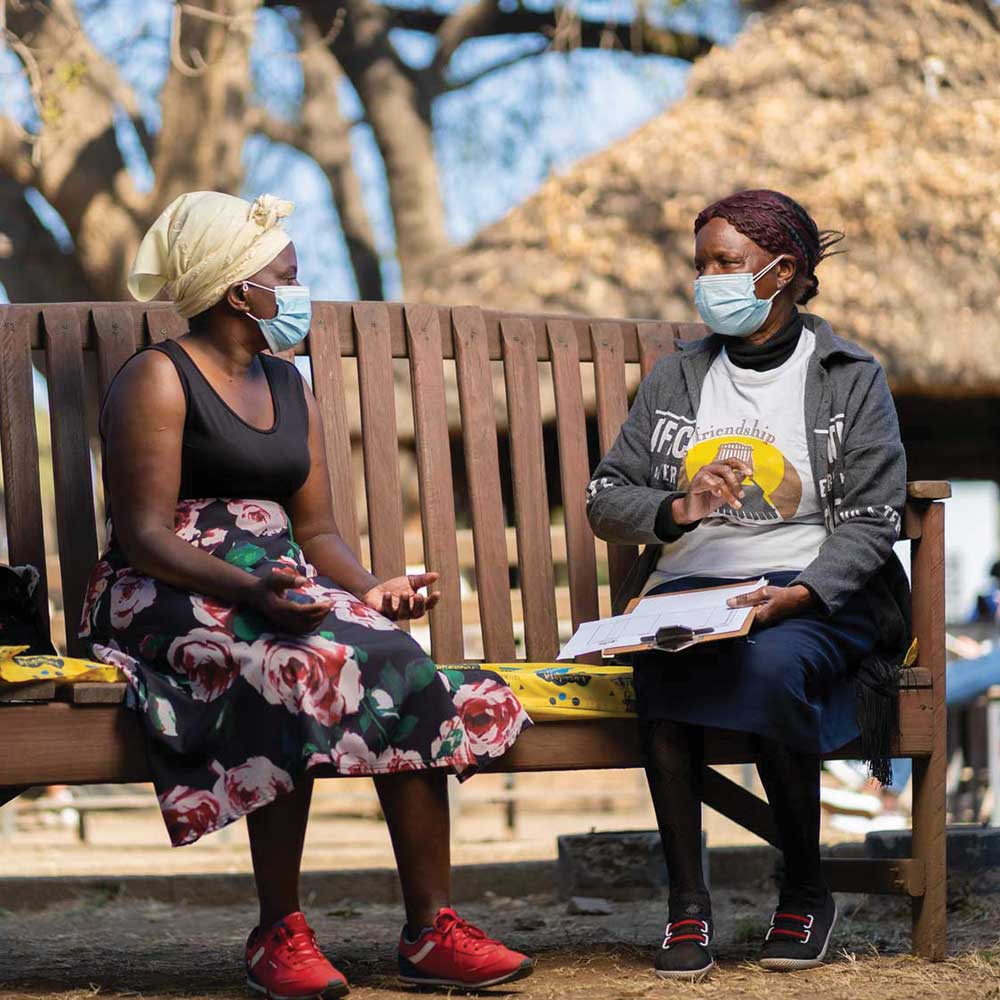
Marion Malcome, PhD
Black Women and Mental Wellness
Health Equity and Social Determinants of Health
Adapting peer mental health support for Black women
Learn More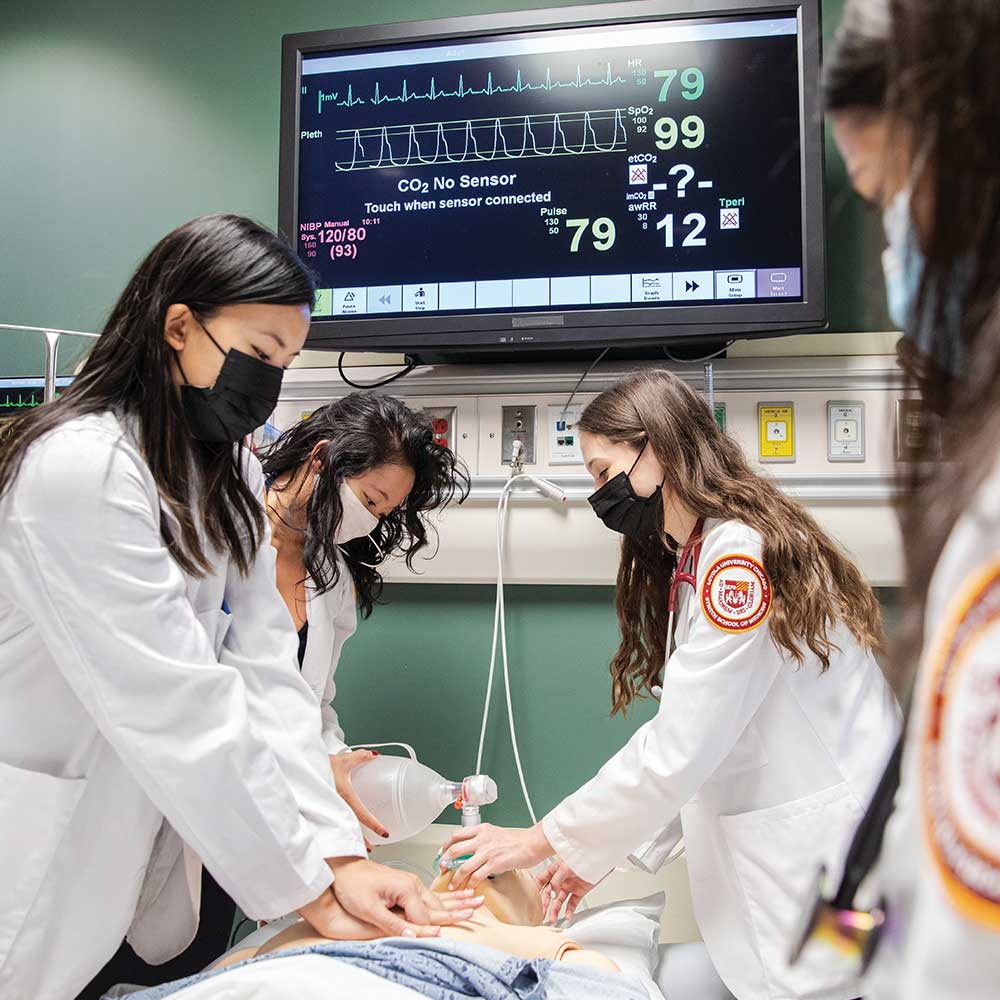
Mohammad Samie Tootooni, PhD
Respiratory Distress and Heart Health
Disease and Clinical Syndrome Prevention
AI-driven cardiopulmonary prediction and data integration
Learn More
Amy Bohnert, PhD
Stress, Racism and Sleep
Lifestyle Factors and Health
Study explores how discrimination impacts teen sleep
Learn MoreIn the clinical setting, we can inform the nurse that the patient who has been sleeping all day may have hypoactive delirium, and let’s follow up a little bit more closely because they’ll probably end up in the ICU. Outside of the clinical setting, I feel like I can pull this into the community, as there is not enough awareness about what delirium is. Often with older adults, it can be something that triggers it as simple as a urinary tract infection, and the person isn’t “themselves”. If they don’t have somebody around them that knows what they’re like, that sees them almost on a daily basis, somebody that comes to visit them, often what happens is it’s assumed that they have some type of dementia.
And of course, dementia is a neurocognitive disease. That has such a stigma associated with it. Often, people don’t go to get treatment because if they think it is dementia, they may not follow up. So it’s usually one form of delirium where they may have to have follow up. I think it’s important that the community has awareness about that. It is highly treatable if we can identify the cause. Sometimes, it is a very treatable cause. Getting the word out in the community is something that’s very important, and also how I feel like I can have an impact.
How is delirium defined?
Delirium is defined as an acute confusional state or acute cognitive change. The person experiences inattention. Maybe they can’t follow commands or they can’t carry on a conversation. Anything other than normal is indicative of a level of consciousness change. It can manifest as a change in level of consciousness or disorganized thinking. Disorganized thinking, for example, is if somebody is just kind of rambling on, or you ask them a question and they answer something that’s not appropriate. Or, they may see little hallucinations or may experience things like inability to recall where they are. You ask, “Tell me where you are”. And they say, “I’m at the grocery store”. And, you know, that’s not usual for them. That is disorganized thinking. So it’s the first two criteria, and then either disorganized thinking or the change in the level of consciousness. Now, it can be all four and it can range, it can go in and out.
I had this rich data source but I didn’t have anything other than ICD-10 codes that could say whether a person has delirium or not. To try to identify these patients was really going be difficult. Dr. Kim Oosterhouse
Those that care for people that have loved ones, or are working with patients or residents that have Alzheimer’s disease or Alzheimer’s related dementias, they know what that person is like day to day. Caregivers also in the community need to be alert. I work with older adults in the community. We’ve partnered with f ive older adult organizations in the Edgewater area, and one of them is the Chicago Methodist Senior Services. They have residents for not only independent living, but assisted living and skilled facilities for those that have Alzheimer’s disease related dementias in varying stages. I educate their staff to help with the differentiation of what is delirium versus when you can see it, or when it’s superimposed on Alzheimer’s disease or dementia.
With this project, is there an ambition to do research funding?
NIH discovery grants are what I’m hoping to do in the future. I’d like to move to unsupervised machine learning and see if we can use data subsets to assess causes and types of delirium.
You’ve mentioned community education as something that you’d like to do. Are there other ways or opportunities that you envision for disseminating your research and findings?
Definitely. I attended the annual conference of the Gerontological Society of America and I’m also working on publications. Beyond informatics, I’d like to get the word out to nurses and health systems as well, because even though there are tools out there, nurses still aren’t consistently using them.
I recognize alarm fatigue and know that nurses don’t want to have to fill out one more redundant form. As a nurse, my main concern is that a clinician can do something about the patient that is experiencing this. My main goal is improving health outcomes for those older adults so that they don’t needlessly suffer.
Kim Oosterhouse, PhD
Dr. Oosterhouse: I’ve always had an interest in delirium because I was an ICU nurse for my clinical practice and I have a passion for older adults. Currently, I’m also out in the community in the Edgewater area on the Lake Shore Campus, working with older adults. At any rate, in the ICU, the majority of patients are people aged 65 and older. I was seeing a lot of patients that would become confused, not themselves, and some would start getting physically aggressive and angry.
Unfortunately, delirium goes unidentified and unrecognized. It happens frequently, and not just in acute care. It happens in the community as well, probably much more so than we even realize. I wondered how many people actually just don’t get help when they are living alone. That was my interest. While I am not an informaticist by any stretch of the imagination, I did love statistics. I got involved in CHOIR because when I got to Loyola, I saw they had this rich clinical research database. However at Loyola at the time, they were not using any of the screening tools for delirium.
I had this rich data source but I didn’t have anything other than ICD-10 (disease classification) codes that could say whether a person has delirium or not. To try to identify these patients was really going to be difficult. I talked to my mentor, nurse informaticist Dr. Kathy Bobay, and she was phenomenal with helping me. She was developing a method to extract data with electronic health records for natural language processing (NLP). The electronic health record is structured. It’s all the check boxes and vital signs. The unstructured data is the narrative note, the clinical note. Well, 80% of the chart is narrative notes, and we don’t use that data. As such, NLP has really been wonderful in allowing researchers to use that part of the electronic health record.
One core task was bringing different billing codes together, whether it be for labs, diagnosis, or procedures, and creating one ontology so that they are all grouped in such a way that they have a common meaning and understanding. I used those identifiers as described by the unified medical language meta thesaurus in order to extract unique identifiers for delirium from the electronic health record.
This took a little while but now we’re at the point that I’m looking at machine learning algorithms and developing that model using random forests and other support vector machines (SVM), so different methods of modeling may be able to predict or identify those that most likely have delirium. The fact that it can be done almost in real time is important because if we can’t identify it, we can’t treat it, and the outcomes are really bad if unidentified.
In the clinical setting, we can inform the nurse that the patient who has been sleeping all day may have hypoactive delirium, and let’s follow up a little bit more closely because they’ll probably end up in the ICU. Outside of the clinical setting, I feel like I can pull this into the community, as there is not enough awareness about what delirium is. Often with older adults, it can be something that triggers it as simple as a urinary tract infection, and the person isn’t “themselves”. If they don’t have somebody around them that knows what they’re like, that sees them almost on a daily basis, somebody that comes to visit them, often what happens is it’s assumed that they have some type of dementia.
And of course, dementia is a neurocognitive disease. That has such a stigma associated with it. Often, people don’t go to get treatment because if they think it is dementia, they may not follow up. So it’s usually one form of delirium where they may have to have follow up. I think it’s important that the community has awareness about that. It is highly treatable if we can identify the cause. Sometimes, it is a very treatable cause. Getting the word out in the community is something that’s very important, and also how I feel like I can have an impact.
How is delirium defined?
Delirium is defined as an acute confusional state or acute cognitive change. The person experiences inattention. Maybe they can’t follow commands or they can’t carry on a conversation. Anything other than normal is indicative of a level of consciousness change. It can manifest as a change in level of consciousness or disorganized thinking. Disorganized thinking, for example, is if somebody is just kind of rambling on, or you ask them a question and they answer something that’s not appropriate. Or, they may see little hallucinations or may experience things like inability to recall where they are. You ask, “Tell me where you are”. And they say, “I’m at the grocery store”. And, you know, that’s not usual for them. That is disorganized thinking. So it’s the first two criteria, and then either disorganized thinking or the change in the level of consciousness. Now, it can be all four and it can range, it can go in and out.
Those that care for people that have loved ones, or are working with patients or residents that have Alzheimer’s disease or Alzheimer’s related dementias, they know what that person is like day to day. Caregivers also in the community need to be alert. I work with older adults in the community. We’ve partnered with f ive older adult organizations in the Edgewater area, and one of them is the Chicago Methodist Senior Services. They have residents for not only independent living, but assisted living and skilled facilities for those that have Alzheimer’s disease related dementias in varying stages. I educate their staff to help with the differentiation of what is delirium versus when you can see it, or when it’s superimposed on Alzheimer’s disease or dementia.
With this project, is there an ambition to do research funding?
NIH discovery grants are what I’m hoping to do in the future. I’d like to move to unsupervised machine learning and see if we can use data subsets to assess causes and types of delirium.
You’ve mentioned community education as something that you’d like to do. Are there other ways or opportunities that you envision for disseminating your research and findings?
Definitely. I attended the annual conference of the Gerontological Society of America and I’m also working on publications. Beyond informatics, I’d like to get the word out to nurses and health systems as well, because even though there are tools out there, nurses still aren’t consistently using them.
I recognize alarm fatigue and know that nurses don’t want to have to fill out one more redundant form. As a nurse, my main concern is that a clinician can do something about the patient that is experiencing this. My main goal is improving health outcomes for those older adults so that they don’t needlessly suffer.